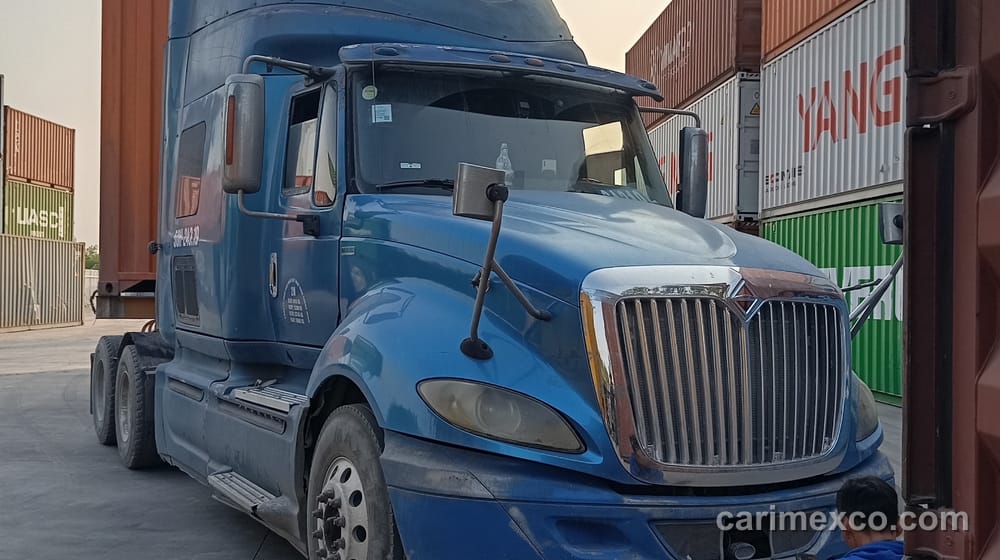
The question businesses ask most often when looking for a carrier is not “how much” but “why do two quotes differ so much”. For the same 40-foot container haul from Nhon Trach to Cat Lai, two quotes can differ significantly without either being wrong — they simply cover different items. This article explains what a road freight rate is built from, the three pricing methods commonly used in the market, and how to read a quote so you compare like with like.
1 What Makes Up the Rate for One Container Trip
The final figure on the invoice is almost never just the cost of running the truck. A typical road container trip is made up of the following components:
- Line-haul charge — the largest part, driven by distance and vehicle type. This is usually the only figure quoted over the phone.
- Lift on – lift off charges at the port or depot — collected by the port or depot; the carrier pays on your behalf and bills it back.
- Road tolls, BOT stations and ferries — fixed per lane, and clearly different between the Cat Lai route and the Cai Mep – Thi Vai route.
- Waiting time (truck detention) — charged when loading or unloading at the warehouse exceeds the agreed free time, usually by the hour.
- Fuel surcharge — on long-term contracts this is normally itemised separately and adjusted with fuel prices, instead of renegotiating the whole rate.
- Yard storage and container detention — incurred when cargo cannot enter the warehouse in time or the empty is not returned within the shipping line’s free period.
- Permit and route survey costs — only for oversized or overweight cargo.
The three items most often missed when comparing quotes are waiting time, container detention and lift on – lift off. A “cheaper” quote that excludes these three usually ends up more expensive at settlement.
2 Where Market Rates Currently Sit
For a rough benchmark, the ranges below are those published openly by transport companies in rate sheets updated in August 2026, covering the line-haul charge only. These are indicative market ranges, not a CARIMEX quotation, and they exclude VAT and lift on – lift off charges.
| Lane | 20-foot container | 40-foot container |
|---|---|---|
| Inner-city HCMC (Cat Lai to Districts 1, 3, 4, 7 and Thu Duc) | VND 1.8 – 2.6 million | VND 2.5 – 3.6 million |
| HCMC ↔ Dong Nai (including Nhon Trach) | VND 2.7 – 3.2 million | VND 3.9 – 4.7 million |
| HCMC ↔ Binh Duong | VND 2.8 – 3.3 million | VND 2.8 – 3.8 million |
| HCMC ↔ Long An, Tay Ninh | VND 2.6 – 3.1 million | VND 3.8 – 4.9 million |
| HCMC ↔ Ba Ria – Vung Tau (Cai Mep – Thi Vai) | VND 4.5 – 5.5 million | VND 5.5 – 7.0 million |
| Long lanes: Mekong Delta and south-central provinces (Ben Tre, Kien Giang, Khanh Hoa) | VND 6.1 – 15.0 million depending on the province; many rate sheets apply one figure to both 20-foot and 40-foot containers | |
One detail worth noting: for the same distance under 100 km, some carriers publish a blanket range of VND 3.5 – 5.0 million for a 20-foot container and VND 4.5 – 6.0 million for a 40-foot container — noticeably higher than the lane-by-lane figures above. That gap is not about who is expensive and who is cheap; it is because the rate sheets cover different items and assume different things about the return leg, waiting time and delivery stops. That is exactly what the next two sections are about.
The items outside the line-haul charge also have reference figures:
| Item | Indicative level |
|---|---|
| Lift on – lift off for a 40-foot container at the port | Around VND 1,350,000 per container |
| Storage-related lift surcharge (Cat Lai, 40’DC) | First 3 days free; roughly VND 416,000 per container from day 4 to day 6, rising steeply after day 9 – 10 |
| Waiting time at the customer’s warehouse | Around VND 150,000 per hour, charged after 2 free hours |
| VAT, manual loading labour, reefer genset running | Almost every rate sheet charges these separately, outside the per-trip rate |
A note on the figures above: these are indicative market ranges compiled from publicly published rate sheets, updated August 2026, and are meant only for orientation and budgeting. Actual prices move with fuel prices, peak season, port congestion, cargo type and the specific conditions of each shipment — one August 2026 rate sheet even states its reference diesel price of VND 27,620 per litre, meaning the rate moves when fuel moves. For the real number on your lane, send us a request and we will quote it.
3 The Three Pricing Methods in Common Use
There is no single formula. Depending on the cargo and the nature of the shipment, the market uses one of three methods:
- All-in per trip (fixed lane) — the most common for import-export containers. The rate is tied to one origin-destination pair and one container type, for example Nhon Trach → Cat Lai, 40-foot container. The advantage is that the cost is known in advance and easy to build into product costing. This is what CARIMEX applies for most customers.
- Per kilometre — often used for long lanes that are not fixed, or for one-off project cargo. The unit rate is multiplied by distance, plus the fixed items. It is transparent, but both sides must agree in advance whether distance means actual kilometres driven or map distance, and whether the empty return leg counts.
- Per tonne or per cubic metre — used for bulk and part-load cargo moving on flatbed or box trucks rather than in a sealed container. The carrier takes the greater of actual weight and volumetric weight.
Choosing the wrong method is a common source of disputes: light but bulky cargo priced per tonne loses money for the carrier, while pricing it per cubic metre looks expensive to the shipper. For shipments that repeat weekly, an all-in lane rate is almost always better for both sides because it removes the repeated negotiation.
4 Why Two Quotes for the Same Lane Differ
Once the origin-destination pair and the container type are the same, the gap almost always comes down to these five factors:
- Whether the return leg can be filled. A truck carrying cargo both ways can always quote better than one running empty one way. This is why carriers with high volume on the same corridor are usually cheaper — not because they accept thinner margins.
- Where the tractor fleet is based. The distance from the truck yard to the pickup point is a real cost the customer never sees. A fleet based in Nhon Trach running the Dong Nai – Cat Lai lane has a completely different cost structure from a fleet dispatched down from the inner city.
- How much free waiting time is included. A quote based on 2 hours of waiting and one based on 4 hours are two different numbers. If your warehouse is slow to load and you take the 2-hour quote, the difference simply reappears on the invoice.
- The number of delivery stops. Each extra stop adds time and adds the risk of missing the next run — it is not simply a few more kilometres.
- Whether there is an empty-return depot near the lane. Returning the empty to a distant depot costs both mileage and time; a container yard on the lane itself removes that leg.
5 How to Read a Quote Properly
Before comparing two quotes, check that they cover the same scope. Six questions to ask about any road freight quote:
- Does the rate already include lift on – lift off and road tolls, or are those billed separately at cost?
- How many hours of free loading and unloading time are included, and how is the excess charged?
- Which container type does the price apply to — 20-foot, 40-foot or reefer?
- If the shipment is cancelled after the truck has been dispatched, how is that charged?
- Until what date is the rate valid, and by what mechanism is it adjusted for fuel prices?
- Where in the contract are liability for the cargo and the insured limits stated?
A quote that answers these six questions may look more expensive on paper, but it is the real number. A quote with a single rate line will reveal the rest gradually while the work is running.
6 Where the Real Savings Are
Most of the room to cut costs lies in how shipments are organised, not in squeezing the unit rate:
- Consolidate shipments on a fixed schedule so the carrier can arrange return loads, instead of booking trucks ad hoc on a different lane each time.
- Give advance notice of pickup schedules — a truck dispatched to plan always prices better than one dispatched same-day at short notice.
- Shorten loading and unloading time at your warehouse, since this is the one surcharge entirely within your control.
- Return empties and store containers close to the lane rather than hauling them back to a distant depot.
- Sign a framework contract based on annual volume for regular lanes, fixing both the rate and the fuel adjustment mechanism.
- Control the non-freight items on the ocean side — for import-export cargo the gap between quotes usually sits in shipping line surcharges rather than in the freight itself; see the guide to shipping line surcharges and how ocean freight rates are moving.
Send us the lane, container type and expected volume — CARIMEX returns an all-in quote listing exactly what is included and what is billed separately, within one working day. See road container transport services or call +84 933 968 988.